Knesset Election Results 2026: Netanyahu Stalls as Arab Lists Surge
Knesset Election Results 2026: Netanyahu Bloc in Deadlock
The newly unveiled Knesset election results 2026 have sent political shockwaves across the region, as official tally operations crossing the 76% threshold expose an unprecedented legislative deadlock within the Israeli parliament. The updated data reflects deep systemic polarization, underscoring the structural collapse of traditional coalition formulas and establishing a historic milestone for Arab parliamentary representation.
Netanyahu Right-Wing Coalition Fails to Secure Threshold
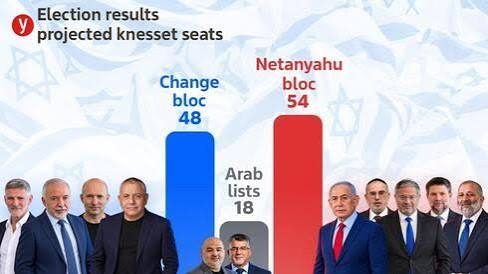
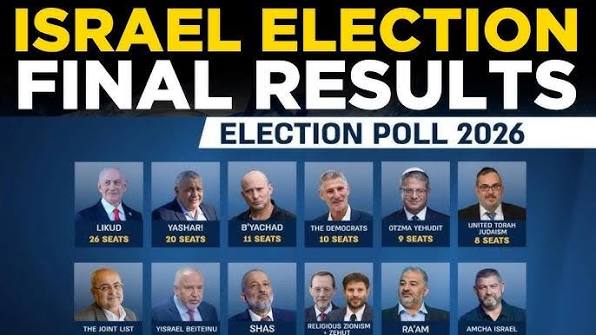
Official projections released by the Central Elections Committee reveal that the hardline and religious bloc steered by Prime Minister Benjamin Netanyahu has reached an impasse at 54 seats. This total leaves the incumbent administration seven mandates short of the absolute 61-seat majority required to ratify a sovereign governing coalition. Observers attribute this contraction to shifting voter sentiments, structural economic fatigue, and growing public scrutiny over ongoing national governance.
Simultaneously, the centrist opposition alliance led by former military chief Gadi Eisenkot captured between 47 and 48 seats. While preventing Netanyahu from securing an uncontested mandate, Eisenkot’s bloc remains numerically incapable of manufacturing an autonomous government. This mathematical reality creates a formidable ideological dilemma for centrist factions, who now find themselves unable to govern without opening direct legislative channels with non-Zionist Arab representatives.
Unprecedented Arab Factions Surge Alters Legislative Balance
The most defining development documented within the 2026 electoral landscape is the monumental surge achieved by independent and unified Arab lists, capturing 18 to 19 seats in the Knesset. This result represents the highest parliamentary concentration for Arab citizens since the institution's establishment. Sustained voter mobilization campaigns and unprecedented turnout in local municipalities directly fueled this historic outcome, reflecting a concerted drive to counter discriminatory legislation and prioritize civic equity.
This legislative milestone effectively elevates the Arab delegation into premier kingmakers. Mathematically, no governing administration can assemble a decisive blocking mechanism against right-wing resurgence without engaging Arab legislative priorities. The sheer magnitude of their parliamentary strength permanently disrupts decades of conventional coalition dynamics, asserting genuine policy influence over the legislative agenda.
Prospective Scenarios and Coalition Stalemates
Faced with diminishing prospects of an outright victory, Netanyahu delivered an urgent morning address advocating for a "unified nationalist right-wing front," explicitly warning against any parliamentary alignments supported by Arab parties. His rhetoric seeks to apply intense tactical leverage on conservative lawmakers within Eisenkot’s perimeter, hoping to trigger party defections that could bridge his seven-seat gap.
Political analysts monitoring the post-election developments identify three principal trajectories:
- Protracted, acrimonious coalition deliberations resulting in a fragile national unity government marked by rotating executive power.
- A landmark tactical accommodation between the moderate opposition and Arab parliamentarians to prevent right-wing continuity.
- Complete institutional breakdown during government formation talks, forcing the state toward another cycle of snap parliamentary elections.
The immediate implications indicate that the parliament has entered a prolonged phase of political vulnerability, where conventional governance models are no longer sufficient to navigate the evolving electoral reality.

Fadi Q
News writer and editor at Madar24, contributing to the preparation and editing of news and articles and the publication of digital content, with a focus on presenting clear, accurate, and up-to-date information to readers.
All articles by this author