SpaceX Starship Flight 14 : Historic Earth Orbit Mission
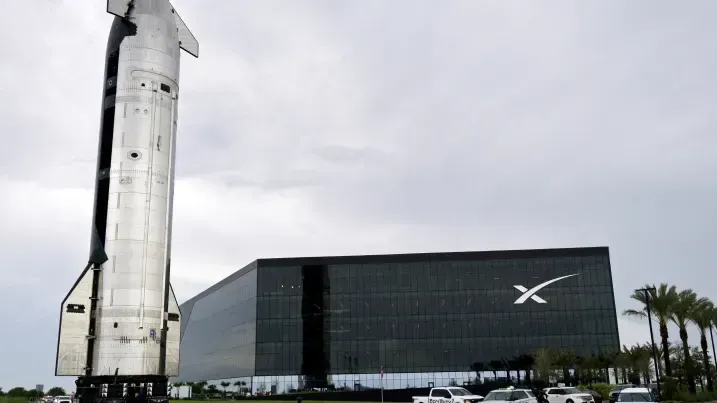
The SpaceX Starship Flight 14 marks a defining milestone in aerospace history as SpaceX attempts its first full orbital trajectory around Earth.
Dominating global Google Trends and capturing round-the-clock headlines across major outlets including CNN and CNBC, this pivotal mission signifies SpaceX’s decisive leap from suborbital maneuvers to sustained orbital operations. By introducing full orbital testing and preparing the deployment of advanced Starlink V3 satellites, this mission accelerates humanity's journey toward multiplanetary life.
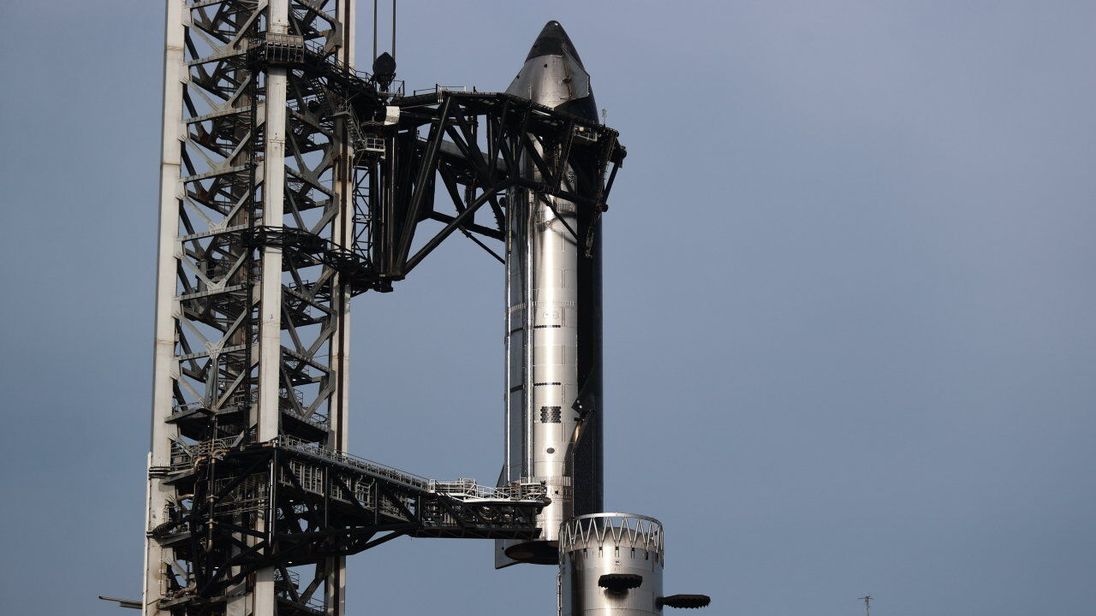
Unmatched Engineering: Starship and the Super Heavy Booster
Standing at an astonishing height of approximately 121 meters (nearly 400 feet), the Starship system is the largest and most powerful flying machine ever conceived. It comfortably surpasses the historic Saturn V rocket in both physical scale and propulsive capability. The first-stage Super Heavy booster is powered by 33 methane-fueled Raptor engines that generate over 16 million pounds (74 meganewtons) of thrust at liftoff. Engineered for total and rapid reusability, Starship aims to drastically reduce the cost per kilogram of launching payloads into orbit.
Key Objectives of Flight 14: Orbital Mechanics and Heat Shield Tests
Flight 14 is not merely an ascent demonstration; it incorporates intricate operational milestones designed to validate deep-space viability:
Sustained Orbital Insertion: Completing a multi-hour trajectory around Earth to evaluate thermal management, navigation systems, and attitude control.
Payload Bay Deployment: Releasing 26 next-generation Starlink V3 test satellites through the specialized payload bay door in microgravity conditions.
Atmospheric Re-entry and Splashdown: Subjecting Starship's proprietary ceramic heat shield tiles to temperatures exceeding 1,400 degrees Celsius during re-entry at hypersonic velocities, culminating in a controlled ocean splashdown.
The NASA Artemis Alliance: The Gateway to the Moon and Mars
NASA holds a direct stake in the outcome of this orbital mission. Under the Human Landing System (HLS) contract, NASA selected Starship to ferry astronauts from lunar orbit down to the Moon's surface during the Artemis III and subsequent missions. A successful orbital demonstration proves the foundational interplanetary voyages to Mars as envisioned by Elon Musk.
Launch Schedule and How to Watch the Live Stream
SpaceX will broadcast real-time, high-definition coverage of Flight 14 starting approximately 45 minutes prior to engine ignition. Enthusiasts can track the launch, stage separation, and telemetry data via SpaceX’s official handle and Elon Musk’s profile on X (formerly Twitter), alongside dedicated spaceflight streaming portals.
Join the Discussion: Do you believe Starship's orbital breakthroughs will make manned missions to Mars a reality within our lifetime? Share your thoughts below!

Fadi Q
News writer and editor at Madar24, contributing to the preparation and editing of news and articles and the publication of digital content, with a focus on presenting clear, accurate, and up-to-date information to readers.
All articles by this authorRelated articles

BioWare studio closure and 400 staff layoffs confirmed by EA
Electronic Arts officially shuts down BioWare and cuts 400 jobs to reduce overhead costs, casting severe doubts on the future of Mass Effect and Dragon Age.

Critical PHP security flaw triggers emergency government shutdowns
A critical PHP security flaw discovered by OpenAI sparks emergency server shutdowns across government agencies as global tech leaders deploy rapid fixes.

Nintendo Switch 2 Zelda Demand Sparks Official Restock
Nintendo officially concedes it underestimated consumer demand for the Zelda 40th Anniversary Switch 2 edition, confirming fresh retail restocks are underway.