US Strike Disables Cargo Ship in the Gulf of Oman Over Blockade Breach
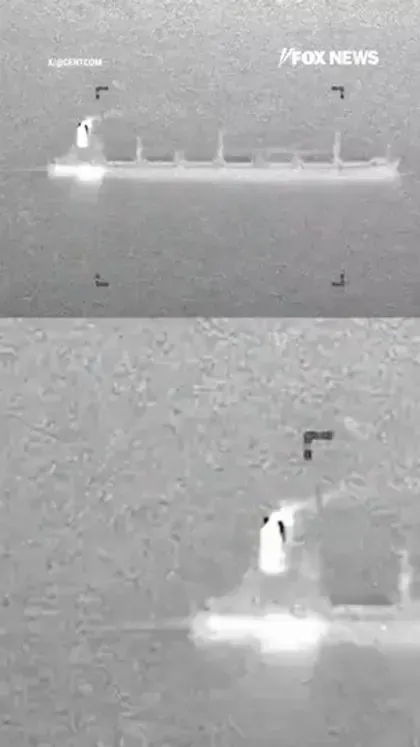
Naval tensions across Middle Eastern transit corridors reached a critical flashpoint following official confirmation that an American fighter jet disabled a cargo ship in the Gulf of Oman after the vessel attempted to run an active naval blockade enforced in regional waters. The kinetic operation was widely reported by premier international news agencies, including and Fox News. This unprecedented operational shift transitions regional enforcement from surveillance and warning protocols to direct kinetic interdiction against merchant vessels. Readers can also review our prior coverage on to understand the broader geopolitical backdrop surrounding this naval confrontation.
Kinetic Precision Interception and Tactical Neutralization
According to operational disclosures and official defense statements, the commercial merchant vessel received multiple maritime intercept advisories and radio warnings from coalition monitoring forces. The ship was repeatedly instructed to alter its heading and submit to standard inspection protocols designed to enforce blockade measures against restricted cargo lanes heading toward Iran. Following persistent non-compliance and an aggressive trajectory attempting to breach the naval blockade line, a U.S. strike fighter launched a precision kinetic strike against the vessel. Military authorities confirmed that the targeted munitions were engineered specifically to incapacitate the vessel's propulsion and steering machinery, thereby preventing further navigation without breaching the hull or causing catastrophic sinking and crew casualties.
Global Shipping Shockwaves and War Risk Insurance
Reporting by the Financial Times indicates that this kinetic action has triggered an immediate and severe shockwave across commercial maritime logistics and insurance syndicates. Marine underwriters and international Protection and Indemnity (P&I) Clubs have swiftly begun recalculating transit safety baselines for the entire Gulf of Oman and adjacent waters near the Strait of Hormuz. Industry analysts project an immediate surge in War Risk insurance premiums, placing substantial financial burdens on maritime operators. Additionally, major commercial carriers are assessing contingency measures, with several container lines and bulk transport operators evaluating temporary transit halts outside regional chokepoints until clear navigational security guarantees are re-established.
Legal Precedents and Strategic Regional Implications
The direct neutralization of commercial maritime assets introduces profound challenges under international maritime law, highlighting the contentious balance between high-seas freedom of navigation and the lawful enforcement of military blockades. Coalition naval warships remain stationed in the vicinity of the disabled vessel to evaluate technical safety, monitor maritime traffic, and safeguard neighboring transit corridors. As diplomatic and defense observers closely track potential retaliatory measures, the incident underscores the fragile security environment governing key global energy arteries, threatening broader macroeconomic stability and supply chain integrity across the globe.

Fadi Q
News writer and editor at Madar24, contributing to the preparation and editing of news and articles and the publication of digital content, with a focus on presenting clear, accurate, and up-to-date information to readers.
All articles by this authorRelated articles

Ramadan Alcohol Ban in Egypt Lawsuit Verdict Set for Nov 28
Egypt's State Council Administrative Judiciary Court sets November 28, 2026, for the final ruling on the lawsuit challenging seasonal Ramadan alcohol restrictions and venue closures.
Queensland Flash Flooding and Rare Supercells Threaten Australia
Catastrophic rainfall triggers flash floods in Queensland while severe supercell storms expand across eastern Australia, prompting SES rescues.