US Mortgage Rates Approaching 7% Put Pressure on the Housing Market
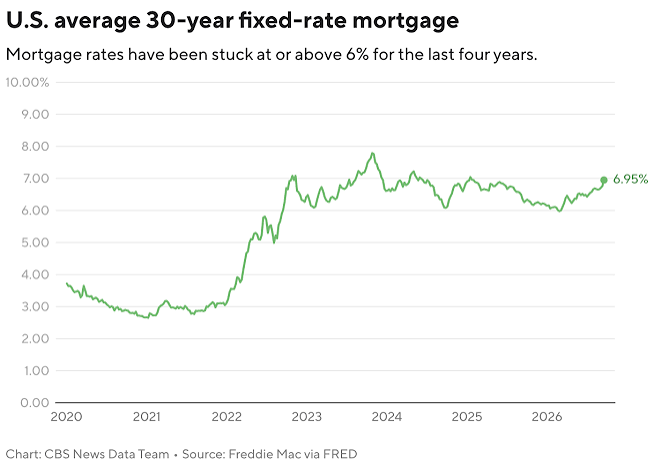
Financial markets and real estate sectors are witnessing rapid shifts as mortgage rates in the United States hover near the critical 7% threshold. This upward pressure on borrowing costs reshapes the economic landscape, presenting formidable hurdles for prospective homebuyers and real estate investors alike. As monetary policies remain centered on curbing inflationary pressures, the rising cost of debt is directly altering the fundamental dynamics of housing supply and buyer demand across the nation.
Impact of Rising Borrowing Costs on Home Affordability
When long-term borrowing costs—particularly the benchmark 30-year fixed loan—approach 7%, the immediate consequence is a sharp contraction in household purchasing power. Even an incremental increase of a single percentage point translates into hundreds of additional dollars added to a borrower's monthly payment. Consequently, first-time homebuyers are feeling the acute pinch of this affordability crunch, leading many to pause their searches or significantly reduce their maximum budget limits. This hesitation naturally dampens overall sales volume and cools down the aggressive bidding environments seen in previous seasons.
The Lock-in Effect and Restricted Housing Supply
A defining characteristic of the current housing climate is the widespread "lock-in effect." A vast majority of current homeowners secured their financing during periods of historic lows, locking in rates between 3% and 4%. Selling their existing property today would require them to abandon those advantageous terms and finance a new residence at rates nearing 7%. As a result, homeowners are choosing to stay put, severely restricting the inventory of existing homes available on the market. This supply constraint serves as a floor for property valuations, preventing steep price drops despite weakening buyer demand.
Navigating Options and Alternative Financing Strategies
To adapt to this challenging borrowing environment, buyers and investors are exploring flexible financing vehicles. Adjustable-rate mortgages (ARMs) and temporary rate buydowns funded by builders are gaining traction as practical solutions to lower initial payments. Real estate analysts emphasize the importance of thorough financial planning,
Future Outlook for the US Real Estate Market
The trajectory of the housing sector remains closely tied to central bank policy decisions, inflation trajectory, and labor market resilience. If mortgage rates remain sustained near these elevated levels, the market will likely experience a period of moderated price growth and extended transaction timelines. Ultimately, a balanced equilibrium will depend on whether income growth can bridge the gap created by elevated financing costs, guiding buyers toward sustainable homeownership.

Fadi Q
News writer and editor at Madar24, contributing to the preparation and editing of news and articles and the publication of digital content, with a focus on presenting clear, accurate, and up-to-date information to readers.
All articles by this authorRelated articles


Ramadan Alcohol Ban in Egypt Lawsuit Verdict Set for Nov 28
Egypt's State Council Administrative Judiciary Court sets November 28, 2026, for the final ruling on the lawsuit challenging seasonal Ramadan alcohol restrictions and venue closures.

Queensland Flash Flooding and Rare Supercells Threaten Australia
Catastrophic rainfall triggers flash floods in Queensland while severe supercell storms expand across eastern Australia, prompting SES rescues.