Off-World Record: NASA Perseverance Rover Eclipses 28 Miles on Mars
Off-World Record: NASA Perseverance Rover Eclipses 28 Miles on Mars
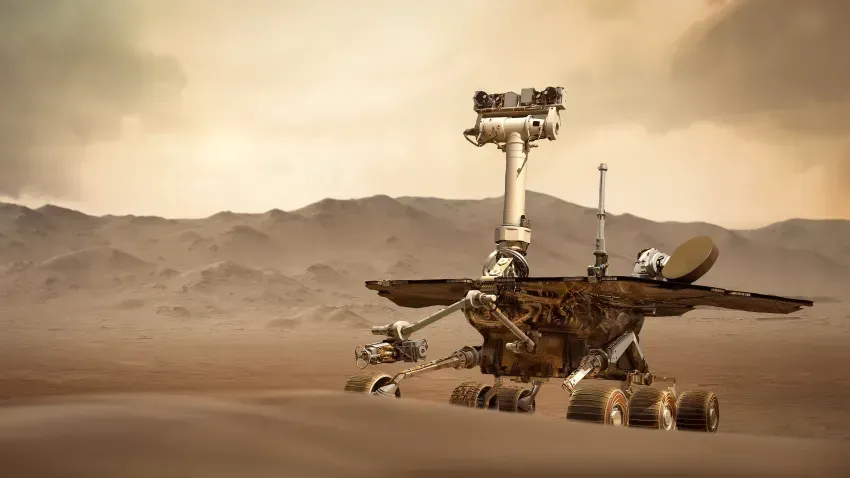
The robotic explorer advancing across the rugged terrain of Jezero Crater.
The NASA Perseverance rover has officially set an unprecedented operational benchmark in planetary robotics by surpassing 28 cumulative miles (over 45 kilometers) traveled across the Martian surface[cite: 1]. This milestone firmly establishes the multi-wheeled mobile laboratory as the record holder for the longest distance driven across an extraterrestrial planetary body, demonstrating remarkable engineering endurance under harsh deep-space conditions[cite: 1].
Surpassing Historic Traversal Records
According to announcements from NASA and the Jet Propulsion Laboratory (JPL), Perseverance has now surpassed the historical planetary odometry benchmarks previously achieved by earlier missions, including the legendary Opportunity rover and lunar rovers from the Apollo era. Operating within the geologically complex Jezero Crater, the robotic astrobiology laboratory continues to scale ancient delta fronts, crater rims, and boulder-strewn washes that once held liquid water billions of years ago.

The Decisive Role of AutoNav Technology
Achieving sustained long-distance progress on Mars is an extraordinary technological feat. Because radio signals between Earth and the Red Planet experience a latency delay ranging from several minutes to over twenty minutes depending on orbital alignment, direct manual control using joysticks is practically impossible.
To overcome this limitation, the rover relies heavily on its upgraded autonomous navigation framework, known as AutoNav. Utilizing high-resolution stereo cameras and dedicated spatial computing hardware, AutoNav maps out 3D terrain grids on the fly. The system dynamically evaluates hazards, calculates rolling resistance, steers around tire-shredding rocks, and avoids treacherous soft-sand traps without needing intervention from Earth-based engineers.
Long-range robotic traversals provide crucial groundwork for future human outposts.
Paving the Path for Future Science and Exploration
Beyond breaking distance records, Perseverance's primary scientific directive remains focused on astrobiological investigations and paleo-environmental reconstruction. The vehicle uses an advanced percussive core drill to extract pristine geological samples from ancient lakebed layers. These core tubes are sealed hermetically and deposited on the Martian surface as part of the planned Mars Sample Return campaign. To learn more about modern robotic architectures,
Key Takeaways of the Mission Milestone:
- Total Traversal: Exceeded 28 cumulative miles across Jezero Crater[cite: 1].
- Technological Edge: Continuous high-speed traversal driven by autonomous AutoNav real-time image processing.
- Scientific Value: Unlocking distant geological zones to collect critical samples for the search for ancient microscopic life.

Fadi Q
News writer and editor at Madar24, contributing to the preparation and editing of news and articles and the publication of digital content, with a focus on presenting clear, accurate, and up-to-date information to readers.
All articles by this authorRelated articles

Winter Time in Germany and Europe: Clocks Fall Back Tonight
Clocks turn back one hour tonight across Germany and Europe, marking the transition to standard winter time with key biological and circadian insights.

Kehlsteinhaus Fire: Historic Eagles Nest Destroyed
A historic catastrophe struck Bavaria as the catastrophic Kehlsteinhaus fire largely destroyed the world-renowned Eagle's Nest outpost, prompting Bavarian police to apprehend a fleeing arson suspect.

UFC 333 Abu Dhabi: Volkanovski vs Evloev Fight Preview
Complete guide to UFC 333 at Etihad Arena featuring Alexander Volkanovski defending his title against unbeaten Movsar Evloev and Yan vs Dvalishvili 3.