Winter Time in Germany and Europe: Clocks Fall Back Tonight
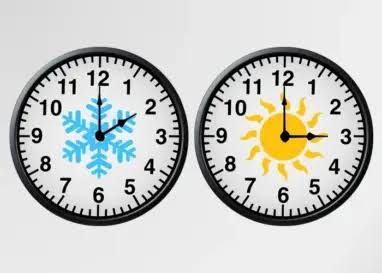
Winter Time in Germany: Clocks Fall Back Tonight
In the early hours of Sunday, October 25, 2026, winter time in Germany and across the vast majority of the European continent officially commences. Millions of households and digital networks will adjust their clocks backward by 60 minutes, turning 03:00 AM back to 02:00 AM. This annual seasonal calibration formally concludes daylight saving time and reinstates the geographically standard astronomical baseline across the European Union.
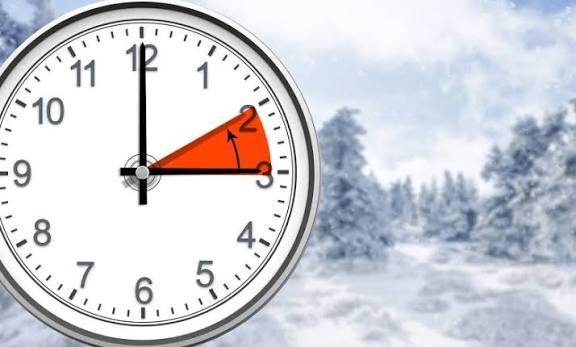
Technical Synchronization and the Extra Hour of Sleep
According to reports featured in Germany’s prominent news magazine Der Spiegel, the immediate and most celebrated benefit for the general public is enjoying an extra hour of rest over the weekend. On an infrastructural scale, the transition operates with extraordinary precision. Smart electronic equipment, telecommunications infrastructure, mobile networks, airport departure schedules, and the federal rail system (Deutsche Bahn) synchronize automatically without human intervention. This automated continuity is made possible through radio frequency time signals broadcast from the Physikalisch-Technische Bundesanstalt (PTB) in Braunschweig. Citizens are solely required to manually set their non-connected mechanical and wall clocks.
The Chronobiological Perspective on Seasonal Transition
Beyond logistics, medical commentary delivered by Tagesschau has reignited intense debate surrounding circadian biology and internal sleep health. Eminent chronobiologists and sleep medicine specialists emphasize that standard winter time corresponds far more naturally to human biological rhythms than extended summer time. The presence of natural solar illumination early in the morning plays an indispensable physiological role in curbing the secretion of melatonin while stimulating cortisol production. This hormonal balance elevates daytime alertness, reduces long-term strain on the cardiovascular system, and mitigates the symptoms of abrupt desynchronization, which frequently leads to sleep deprivation during seasonal clock shifts.
Public Safety Advantages and Practical Commuting Realities
Conversely, analytical coverage highlighted by BILD underscores the pragmatic and societal justifications favoring the return to winter standard time. Statistical transit models confirm that lighter mornings significantly bolster road traffic safety, particularly for young students walking to school and early morning commuters navigating dark suburban highways. Brighter morning environments foster improved attentiveness, diminish workplace stress, and counteract seasonal affective disorders (SAD) that commonly manifest during cold Northern European autumns and winters when daylight hours become constrained.
The Legislative Stalemate Over Abolishing Time Changes
Although the European Parliament overwhelmingly voted to eliminate biannual time alterations in previous sessions, definitive implementation remains stalled within the European Council and European Commission. The ongoing impasse stems from the lack of a shared consensus among member states regarding whether to retain perpetual summer time or perpetual standard winter time. European governments fear that uncoordinated decisions would fragment the internal single market, creating a disjointed mosaic of competing time zones that would complicate flight logistics, trade transport, and unified cross-border communications. Until comprehensive continental consensus is achieved, the autumn ritual of turning the clock back remains an enduring reality of European civic life.

Fadi Q
News writer and editor at Madar24, contributing to the preparation and editing of news and articles and the publication of digital content, with a focus on presenting clear, accurate, and up-to-date information to readers.
All articles by this authorRelated articles

Kehlsteinhaus Fire: Historic Eagles Nest Destroyed
A historic catastrophe struck Bavaria as the catastrophic Kehlsteinhaus fire largely destroyed the world-renowned Eagle's Nest outpost, prompting Bavarian police to apprehend a fleeing arson suspect.

UFC 333 Abu Dhabi: Volkanovski vs Evloev Fight Preview
Complete guide to UFC 333 at Etihad Arena featuring Alexander Volkanovski defending his title against unbeaten Movsar Evloev and Yan vs Dvalishvili 3.

German Pension Back Payment: €255 Payout Under Expanded Mütterrente
Germany rolls out a €255 retroactive pension adjustment under the expanded Mütterrente framework, sparking both financial relief and policy debate