Asteroid Approaches Earth: NASA Observatories on Alert to Track Trajectory

NASA's Planetary Defense Coordination Office and international observatories have intensified monitoring of a near-Earth object approaching its orbital perihelion at extreme velocities, actively tracking gravitational perturbations to rule out any long-term impact threats.
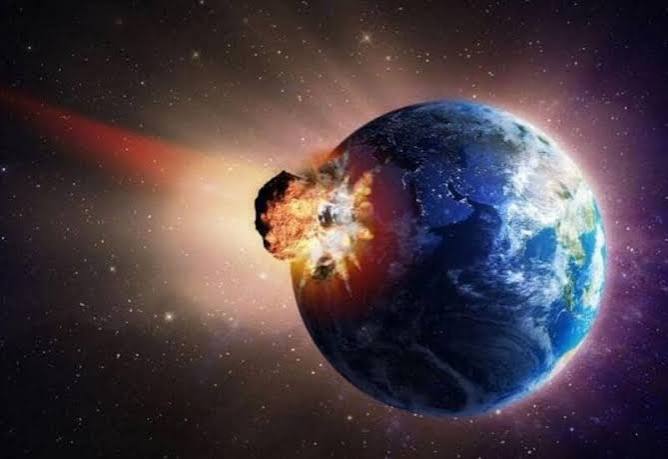
Global astronomy observatories are currently on high alert as telescopes detect a massive asteroid approaching Earth at remarkable velocity. This passage has activated planetary defense monitoring teams to compute its trajectory with utmost precision and verify orbital stability as it sweeps through the inner solar system.
Physical Characteristics and Flyby Trajectory
According to preliminary data released by NASA's Center for Near-Earth Object Studies (CNEOS), the celestial body measures hundreds of meters in diameter. Traveling at thousands of kilometers per hour relative to Earth, astronomical radars confirm that its closest approach will remain several million kilometers away—well beyond the Moon's distance, yet remarkably close in cosmic terms.
Defining Near-Earth Objects and Impact Criteria
Near-Earth Objects (NEOs) are asteroids and comets nudged by gravitational attraction into orbits that allow them to enter Earth's neighborhood. For an asteroid to be formally classified as a "Potentially Hazardous Asteroid" (PHA), it must fulfill two critical criteria:
- An Earth Minimum Orbit Intersection Distance (MOID) of 0.05 astronomical units (approximately 7.5 million kilometers) or less.
- A brightness and diameter exceeding roughly 140 meters, large enough to cause significant regional devastation upon impact.
Gravitational Pulls and the Yarkovsky Effect
Astronomers scrutinize asteroid orbits because space rocks are subject to subtle physical forces, particularly the Yarkovsky effect. This phenomenon occurs when an asteroid absorbs thermal sunlight and re-radiates it as heat while rotating. This asymmetric thermal radiation acts like a tiny thruster, altering orbital trajectories over decades. Constant radar astrometry enables scientists to predict these slight drift variations centuries in advance.
Planetary Defense and the Legacy of DART
Humankind is no longer defenseless against cosmic collisions. Following the breakthrough success of NASA's DART (Double Asteroid Redirection Test) mission—which successfully altered the orbit of an asteroid through kinetic impact—space agencies now possess verified deflection mechanisms. Future missions, including the NEO Surveyor space telescope, will further bolster early detection systems.
Scientific Reassurance
Astrophysicists emphasize that this asteroid will complete a completely safe flyby with zero danger of colliding with our planet. Instead, it provides a valuable scientific vantage point to examine pristine materials dating back to the primordial solar nebula.
Join the Discussion: Do cosmic hazards and rogue asteroids cause you concern, or do you have full confidence in our emerging planetary defense systems? Let us know in the comments below!

Fadi Q
News writer and editor at Madar24, contributing to the preparation and editing of news and articles and the publication of digital content, with a focus on presenting clear, accurate, and up-to-date information to readers.
All articles by this authorRelated articles

Winter Time in Germany and Europe: Clocks Fall Back Tonight
Clocks turn back one hour tonight across Germany and Europe, marking the transition to standard winter time with key biological and circadian insights.

Kehlsteinhaus Fire: Historic Eagles Nest Destroyed
A historic catastrophe struck Bavaria as the catastrophic Kehlsteinhaus fire largely destroyed the world-renowned Eagle's Nest outpost, prompting Bavarian police to apprehend a fleeing arson suspect.

UFC 333 Abu Dhabi: Volkanovski vs Evloev Fight Preview
Complete guide to UFC 333 at Etihad Arena featuring Alexander Volkanovski defending his title against unbeaten Movsar Evloev and Yan vs Dvalishvili 3.