Russian Tu-95 Bomber Crash in Amur Kills All 6 Crew Members: Cause and Impact

Russian Tu-95 Bomber Crash in Amur Leaves 6 Crew Members Dead
A catastrophic military incident has occurred in Russia's Far Eastern Amur region, where a Russian Tu-95 bomber crash claimed the lives of all six crew members on board. The loss of this iconic long-range strategic aircraft highlights critical questions surrounding the maintenance, operational intensity, and technical resilience of heavy bomber platforms operating under demanding conditions.

Incident Overview: How the Crash Unfolded
According to footage verified by international news agencies including Euronews and NDTV, burning wreckage and towering plumes of smoke were recorded at the crash site in a sparsely populated sector of the Amur region. Preliminary operational reports indicate that air traffic control lost radar and radio contact with the aircraft during a scheduled routine training flight Emergency recovery units quickly secured the perimeter, confirming that none of the six airmen survived the violent ground impact and subsequent post-crash inferno
Role of the Tupolev Tu-95 in Strategic Aviation
The Tupolev Tu-95 (designated by NATO as the "Bear") remains an indispensable component of Russia's strategic nuclear triad, serving alongside submarine-launched ballistic missiles and land-based silo systems. Recognized worldwide by its swept wings and four Kuznetsov turboprop engines driving contra-rotating propellers, the aircraft is engineered to carry standoff cruise missiles over intercontinental ranges. Despite receiving modern avionics and weapons suite upgrades throughout its service life, the fundamental airframe design dates back to the early Cold War era.
Key Technical Hypotheses Under Investigation
A specialized commission from the Russian Ministry of Defense has opened a forensic inquiry into the disaster. Military aviation analysts point to three primary avenues of investigation:
- Critical Propulsion Malfunction: Mechanical failure or an in-flight fire involving one of the high-torque turboprop powerplants.
- Structural Fatigue: Prolonged flight hours and accumulated stress cycles on long-serving airframes, which can lead to rapid control degradation.
- Emergency Navigation Hazards: Adverse situational challenges that prevented the crew from executing a controlled landing or standard ejection procedures.
Operational Consequences
The loss of six highly qualified aviators represents a painful blow to the operational capabilities of Russia's long-range aviation command. Investigators are currently locating the flight data and cockpit voice recorders to reconstruct the flight's final moments.
For more in-depth reporting and updates, explore our coverage section.
Reader Discussion: Do you believe continuous upgrades of vintage strategic bombers can sustain operational safety, or is an accelerated fleet replacement inevitable? Share your perspective below.

Fadi Q
News writer and editor at Madar24, contributing to the preparation and editing of news and articles and the publication of digital content, with a focus on presenting clear, accurate, and up-to-date information to readers.
All articles by this authorRelated articles

أسعار الشوكولاتة في ألمانيا تقلب الموازين بين ليندت وميلكا
An unprecedented market paradox hits retail shelves as premium Lindt bars retail below mass-market Milka, prompting immediate executive consequences.
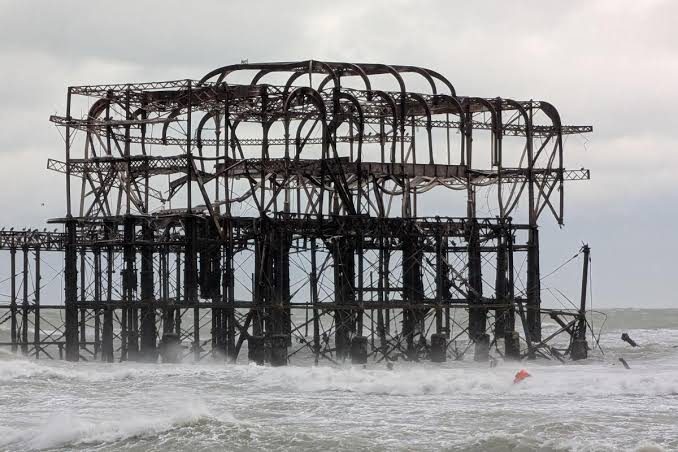
Brighton West Pier Collapse Following Destructive Gales of Storm Austen
High winds and violent waves from Storm Austen trigger structural collapse at the Grade I listed Brighton West Pier along England's southern coastline.