Earth-like planets: How scientists discover habitable worlds
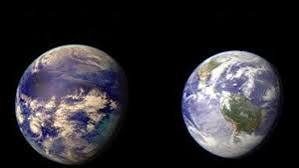
Earth-like planets: How scientists discover habitable worlds
The quest to discover Earth-like planets beyond the boundaries of our solar system represents one of humanity's greatest scientific endeavors. For generations, the possibility of life on other worlds was confined to science fiction, but today astrobiology and modern astrophysics treat the detection of extraterrestrial environments as an active observational priority. Guided by international space initiatives, including NASA, astronomers have now documented thousands of planetary bodies orbiting distant stars.
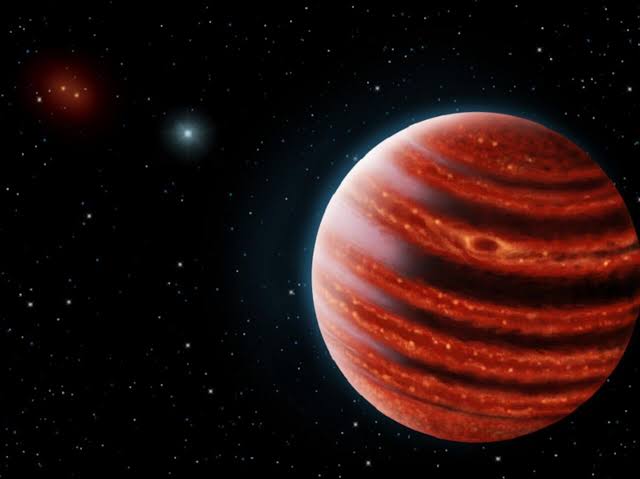
Understanding Exoplanets and Cosmic Diversity
An exoplanet is broadly defined as any planet orbiting a star other than our Sun. These worlds showcase tremendous physical diversity, ranging from massive super-Jupiters and boiling gas infernos to frozen ocean realms and rocky terrestrial spheres. Because host stars radiate brightness millions of times more intense than their faint planetary companions, direct visual photography is exceptionally rare. Instead, researchers deduce the presence and structural parameters of exoplanets through sophisticated indirect detection methodologies.
Core Methodologies for Detecting Distant Worlds
Modern astrophysics relies on three dominant observation methods:
- The Transit Photometry Method: Currently the most prolific discovery mechanism. When an exoplanet crosses directly across the face of its host star, it produces an infinitesimal, recurring drop in stellar brightness. By measuring the depth and intervals of this dip, scientists determine the orbital duration and planetary radius.
- Radial Velocity (Doppler Spectroscopy): An orbiting planet exerts a minute gravitational pull on its host star, creating a detectable spectral shift (Doppler effect) as the star wobbles back and forth. This method allows astronomers to measure orbital eccentricity and determine minimum planetary mass.
- High-Contrast Direct Imaging: Using coronagraphs to block the blinding glare of host stars, large observatories occasionally photograph thermal infrared emissions from young, widely separated exoplanets.
Decoding the Significance of the "Habitable Zone"
When an exoplanet is situated within the "habitable zone" (frequently referred to as the Goldilocks Zone), it orbits at an equilibrium distance where ambient temperatures could theoretically sustain liquid water on its surface under sufficient atmospheric pressure. Crucially, locating an Earth-sized world within this zone does not equate to confirming alien life. Planetary magnetic shielding, volatile atmospheric composition, volcanic activity, and stellar flare outbursts serve as critical factors determining true environmental habitability.
Does Terrestrial Size Guarantee an Earth Twin?
Physical size alone does not ensure an identical twin to Earth. A planet with Earth-like mass can easily possess a runaway greenhouse atmosphere similar to Venus, or be stripped bare of atmosphere altogether. Cutting-edge observatories like the James Webb Space Telescope employ transmission spectroscopy to probe planetary atmospheres for vital biosignatures—such as water vapor, carbon dioxide, and methane—ensuring that every candidate world is evaluated through rigorous empirical data.

Fadi Q
News writer and editor at Madar24, contributing to the preparation and editing of news and articles and the publication of digital content, with a focus on presenting clear, accurate, and up-to-date information to readers.
All articles by this authorRelated articles

Winter Time in Germany and Europe: Clocks Fall Back Tonight
Clocks turn back one hour tonight across Germany and Europe, marking the transition to standard winter time with key biological and circadian insights.

Kehlsteinhaus Fire: Historic Eagles Nest Destroyed
A historic catastrophe struck Bavaria as the catastrophic Kehlsteinhaus fire largely destroyed the world-renowned Eagle's Nest outpost, prompting Bavarian police to apprehend a fleeing arson suspect.

UFC 333 Abu Dhabi: Volkanovski vs Evloev Fight Preview
Complete guide to UFC 333 at Etihad Arena featuring Alexander Volkanovski defending his title against unbeaten Movsar Evloev and Yan vs Dvalishvili 3.