AI Jobs Shift: Ford CEO Reveals White-Collar Risk and Trade Wins
AI Jobs Shift: Ford CEO Explains Why Skilled Trades Outperform Office Roles
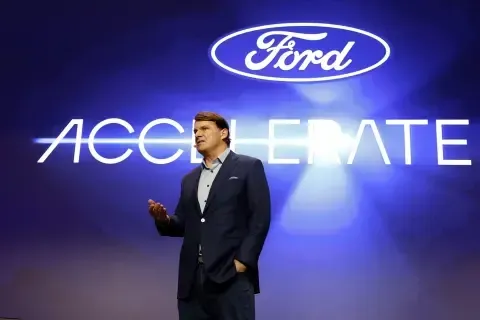
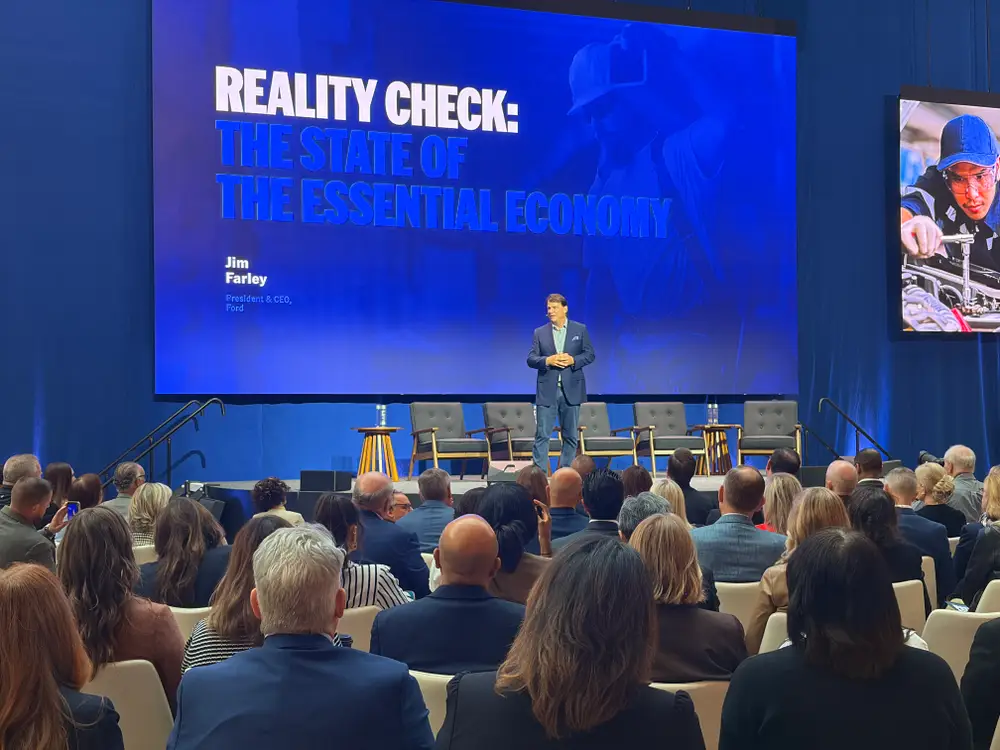
Ford Motor Company CEO Jim Farley delivered a candid evaluation regarding the evolving landscape of AI jobs and the global workforce. Speaking at industry gatherings and cited by prominent publications including Fortune and Business Insider, Farley underscored a paradigm shift where traditional white-collar employment faces unprecedented exposure, while hands-on technicians emerge as indispensable assets.
The Sunset of Routine Spreadsheet Employment
Farley stressed that conventional office positions centered primarily on spreadsheets, basic reporting, and bureaucratic processing are confronting rapid disruption. Advanced machine learning models and automated data engines can now synthesize, compute, and present data far more swiftly and cost-effectively than full-time desk workers. Consequently, global corporations no longer require the same volume of administrative overhead to maintain day-to-day operations.
The Blur Between Engineers and Field Technicians
One of Farley’s most striking revelations centered on the closing gap between degree-holding desk engineers and certified skilled tradespeople. While design engineering remains vital, state-of-the-art manufacturing plants rely intrinsically on human dexterity. Advanced robotic arms, precision sensors, and automation controllers demand hands-on diagnostic mastery when hardware fails in high-stakes production lines. As a result, robotics technicians and electro-mechanical craftspeople possess career longevity that screen-based algorithms simply cannot displace.
AI as an Ally for Blue-Collar Production
Farley reframed artificial intelligence not as a universal threat, but as an productivity amplifier for essential blue-collar workers. Machine intelligence serves as an interactive copilot for field specialists—providing predictive maintenance alerts, mechanical schematics, and rapid diagnostics. Conversely, for white-collar workers doing repetitive cognitive work without applied practical execution, AI functions as a direct substitute.
In conclusion, the future job market favors those who can bridge digital proficiency with real-world, tangible mechanics. Farley’s analysis provides a pivotal wake-up call: investing in technical trades and applied robotics offers far greater resilience in the modern artificial intelligence era.

Fadi Q
News writer and editor at Madar24, contributing to the preparation and editing of news and articles and the publication of digital content, with a focus on presenting clear, accurate, and up-to-date information to readers.
All articles by this authorRelated articles

BioWare studio closure and 400 staff layoffs confirmed by EA
Electronic Arts officially shuts down BioWare and cuts 400 jobs to reduce overhead costs, casting severe doubts on the future of Mass Effect and Dragon Age.

Critical PHP security flaw triggers emergency government shutdowns
A critical PHP security flaw discovered by OpenAI sparks emergency server shutdowns across government agencies as global tech leaders deploy rapid fixes.

Nintendo Switch 2 Zelda Demand Sparks Official Restock
Nintendo officially concedes it underestimated consumer demand for the Zelda 40th Anniversary Switch 2 edition, confirming fresh retail restocks are underway.